Gulbenkian Institute for Molecular Medicine (GIMM) hosts the new biological sample repository of the European Space Agency
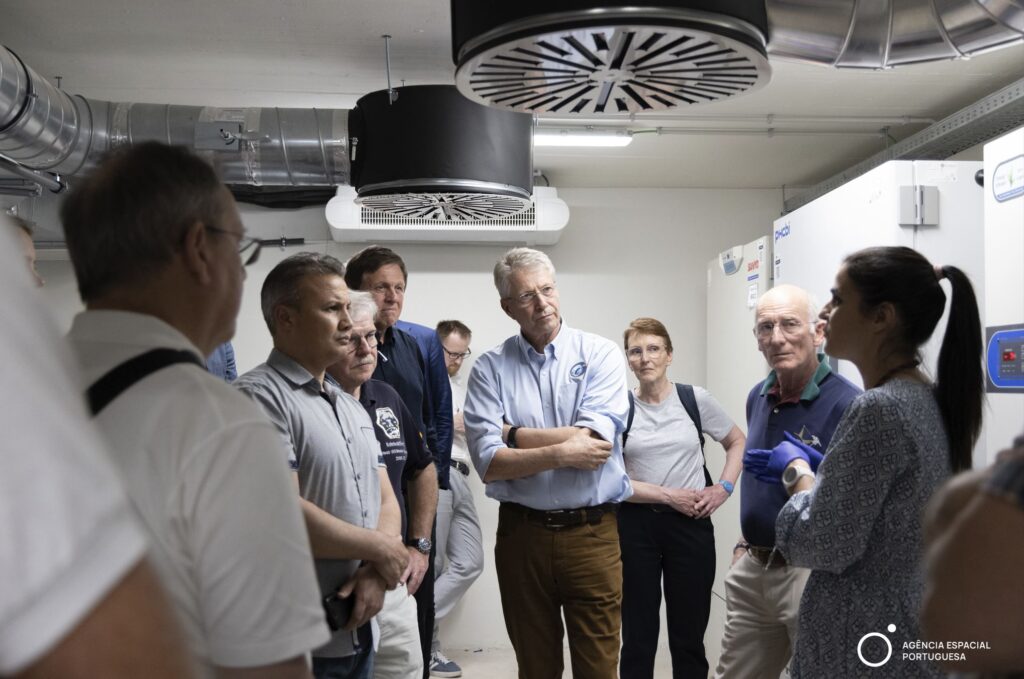
The Gulbenkian Institute for Molecular Medicine (GIMM), in Lisbon, was chosen by the European Space Agency (ESA) to host its new biobank. The decision was formalized this week with the signing of a contract between the two entities and marks the start of an unprecedented collaboration. This infrastructure will make GIMM the only location in Europe where biological samples collected by ESA will be stored — both from space missions and experiments conducted on Earth.
“Receiving this biobank is enormous recognition of the quality, solidity, and agility of the infrastructure we have built at GIMM, with the support of the European Union, Lisbon Academic Medical Center (CAML), and partner institutions,” states Maria Manuel Mota, CEO of GIMM.
More than just a sample “archive”, a biobank is a strategic pillar for scientific and clinical research. These infrastructures allow the storage and preservation, with great technical rigor, of biological materials such as blood, bones, urine, tissues, or microorganisms. In the case of ESA’s Biobank, the samples will be particularly valuable: they come from space missions, simulated experiments with astronauts, and studies on the effects of microgravity on the human body — such as Vivaldi III, which replicates zero-gravity conditions through tilted bed rest or dry immersion.
GIMM will be responsible for providing a highly qualified service of storage, management, and logistical coordination of these samples. The choice of an existing biobank reflects ESA’s commitment to an operational infrastructure, with demanding quality and safety standards – conditions that GIMM already meets by following the standards of the European biobank network BBMRI-ERIC.
“Our infrastructure is fully operational and prepared to host this project with international requirements. We will adapt some procedures, but we have the right foundation: experienced team, validated processes, and a strong connection to clinical and academic contexts,” explains Sérgio Dias, co-director of GIMM Biobank.
The GIMM Biobank, a strategic pillar of the GIMM CARE clinical research initiative, is part of the CAML and results from a solid collaboration between GIMM, the Faculty of Medicine of the University of Lisbon (FMUL), and Santa Maria Hospital (HSM). This ecosystem ensures a unique proximity to clinical practice and teaching, in an environment conducive to innovation. The initial project vision was driven by João Eurico da Fonseca, Dean at FMUL, and has leveraged clinical samples collected mostly at HSM.
The initiative now launched with ESA marks a new stage: it projects GIMM and CAML to an international dimension, at the intersection of medicine, biomedical research, and space exploration.
“This ESA-led project will serve as a scientific time capsule – preserving high-quality biological and environmental samples from our analog studies and, later, space missions, for long-term research,” says Angelique Van Ombergen, ESA’s Chief Scientist of Exploration. “It also reflects the deepening of collaboration between ESA and Portugal through strategic initiatives, supporting international scientific advancement and Europe’s capabilities in space exploration.”
For Joan Alabart, manager of Space Exploration, Entrepreneurship, and Innovation Programs at the Portuguese Space Agency, “establishing this biobank in Portugal will be a catalyst for national science. It will stimulate collaborations with areas such as biomedicine, biotechnology, or human physiology, around aerospace medicine — one of the great priorities of the Portuguese Space Agency”.
The ESA Biobank will be implemented in two phases. The first four months will be dedicated to developing all operational, safety, and transportation protocols. The first samples are expected to arrive in the last quarter of 2025. Subsequently, ESA will use the biobank in a phased manner, as new missions and studies advance.