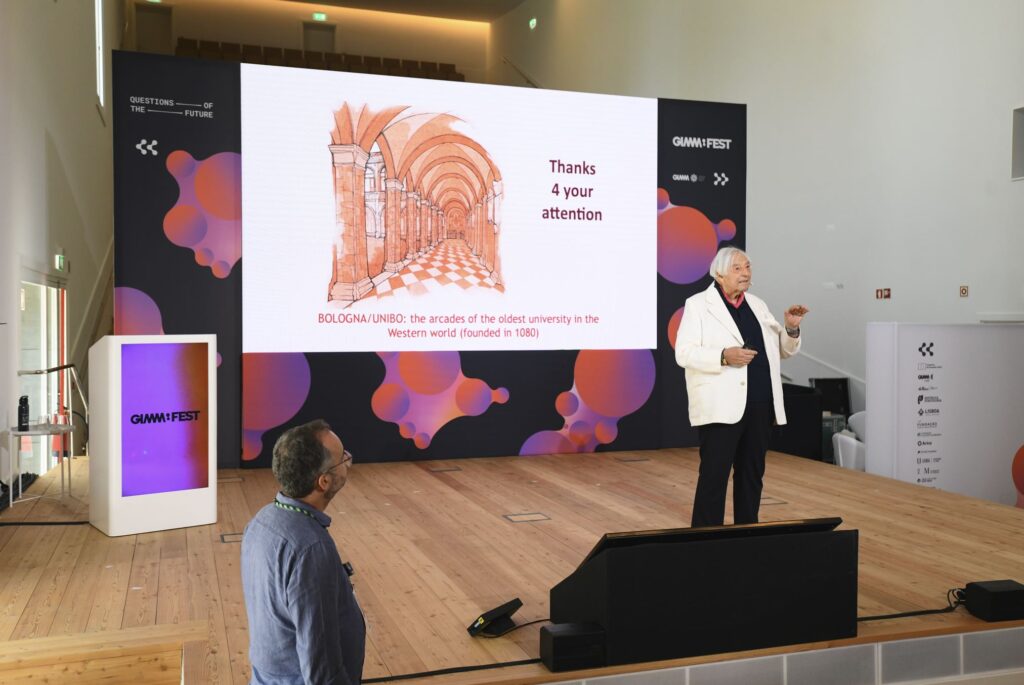
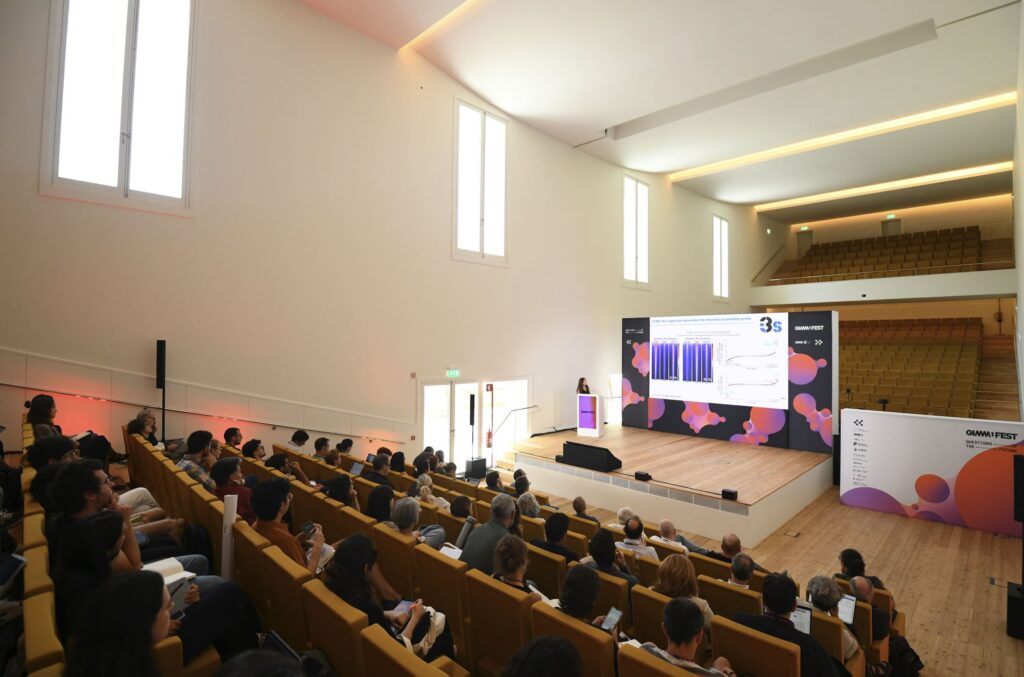
The afternoon session of the GIMM Fest began with enthusiasm and a strong connection to current issues, led by immunologist Claudio Franceschi from the University of Bologna, Italy. A key point of his presentation was the description of the concept of “inflammaging,” a term he coined in 2000, a phenomenon that Time magazine, in 2004, called “the secret killer.”
In 2013, geroscience suggested that “aging is the most important risk factor for all major diseases. We must fight the age of diseases as a whole and not one by one, as is usually done,” noted the physician and researcher.
This was followed by warnings about the impact of chronic inflammation and the degenerative process; the danger of isolation combined with other diseases; how sleep disorders can generate the accumulation of waste through hyperactivation and senescence, spreading inflammation in the brain; and the role of the gut in inflammation, given the importance of the microbiome.
More than 50 to 70 billion cells die every day. “If cell death occurs through necroptosis or pyroptosis, there is a release of damage-associated molecular patterns that must be eliminated because they are highly inflammatory,” explains Claudio Franceschi.
“Quantifying ‘inflammaging’ is important,” he says, in order to explain the heterogeneity of the response that is only found in isolated individuals. “The idea is that the heterogeneity of the phenotype becomes progressively more individualized.”
The image presented by the immunologist is easy to project in one’s mind: the human body is a mosaic of different clocks, also different between each person. Each organ system has different ages and rhythms, so they do not age simultaneously. Specific biological age can predict which organ will fall ill within 10 or 20 years.
Inflammation is shaped by multiple layers of biological and environmental context and cannot be fully understood by cataloging cytokines and pathways. The place where one is born matters, as does the economy in which one lives. What we eat also determines differences, as does a sedentary lifestyle or smoking. “The heterogeneity of aging requires personalized policies and interventions,” warns Claudio.
The next two speakers, Elsa Logarinho from i3S – Institute for Research and Innovation in Health at the University of Porto, and Andrei Seluanov, professor of Biology and Medicine at the University of Rochester, New York, USA, focused on very specific discoveries, narrowing down the theme of aging.
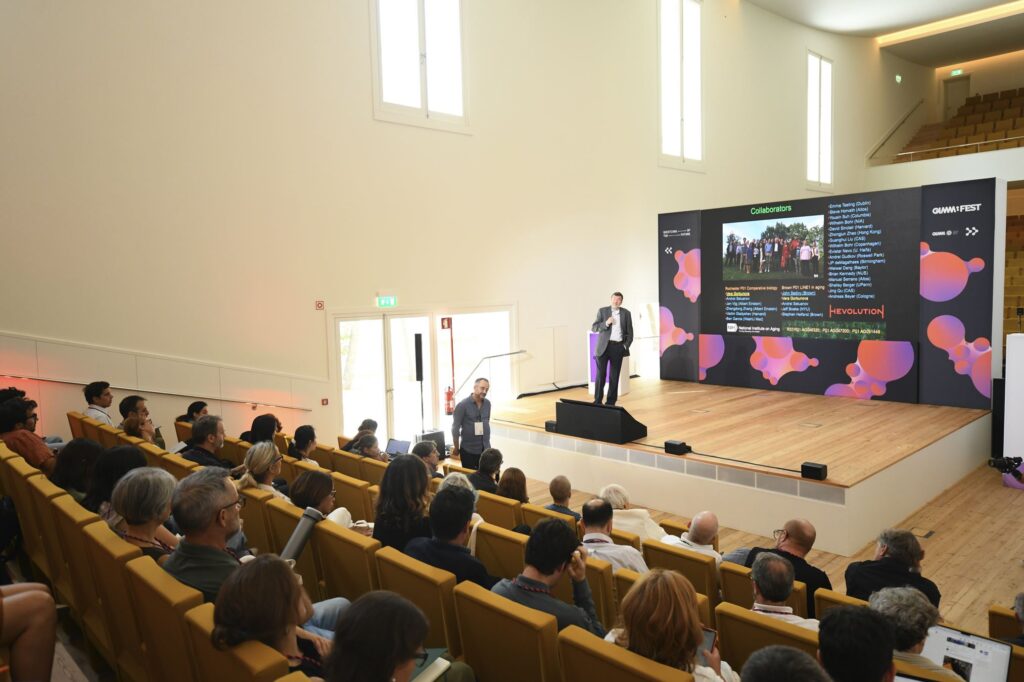
Andrei Seluanov addressed the “dark genome: transposons in aging and age-related diseases.” While most scientific studies focus on the ~1% of the genome that codes for proteins, the ‘dark genome’ refers to the vast non-coding regions of DNA, where transposons (mobile genetic elements) can become activated and contribute to genomic instability and aging.
Regarding genomic instability, Elsa Logarinho corroborates its central role in the aging process. DNA damage affects epigenetic remodeling and impacts cellular senescence.
Seluanov’s presentation continued, explaining how LINE1 retrotransposons induce IFN (a protein produced by leukocytes and fibroblasts) in senescent cells and promote age-related inflammation. The response lies in the suppression of LINE1 elements, which reduces inflammation and frailty in old age, extending both lifespan and reproductive life in men and women.
In the future, the professor and researcher wants to find answers to two questions: Why are transposons beneficial for embryogenesis (promoting pluripotency) and harmful for aging (promoting inflammation)? How can we harness transposons to rejuvenate aged cells?
In 2022, Elsa Logarinho led the i3S team, with Joana Macedo and Rui Ribeiro, who tested the effects of the FOXM1 gene in mouse models. In this work, the team was able to increase longevity by about 30%, a study that made the cover of Nature Aging.
After discovering that the aging of human skin cells is closely related to the repression of the FOXM1 gene over time, this work allowed the advancement of preclinical studies in animal models of premature aging (progeria) and natural aging. The study provided in vivo support for the development of FOXM1-based therapies to delay aging. This approach, the researcher assures, “represents a unified intervention against multiple aging comorbidities and an effective therapy for progeria.”
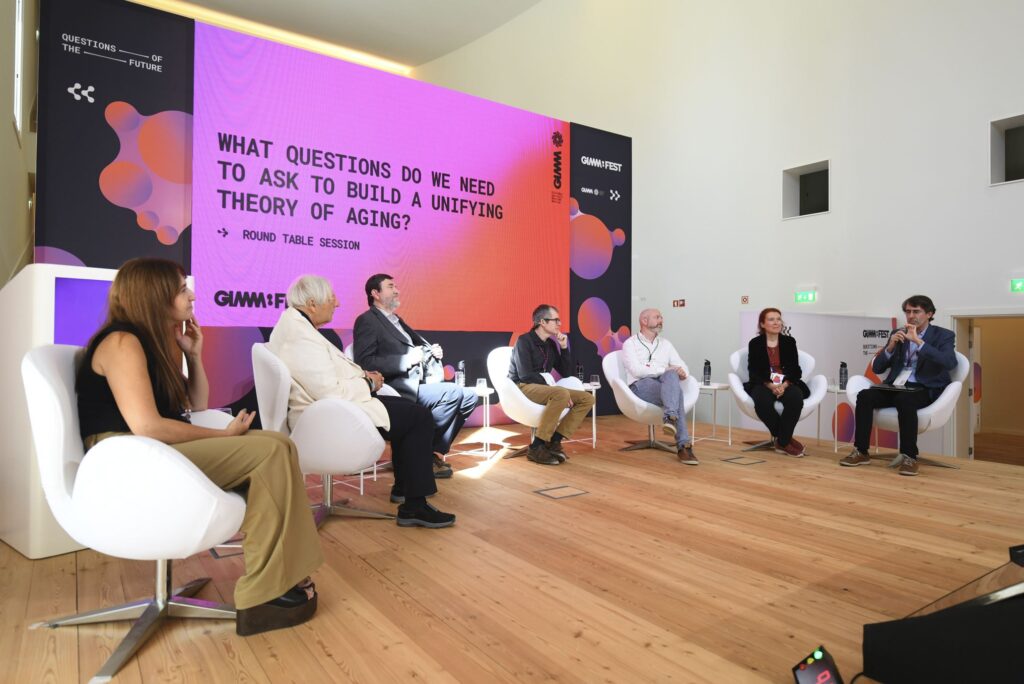
The first day of the GIMM Festival ended with a seven-person roundtable discussion, featuring João Pedro de Magalhães, Vera Gorbunova, Björn Schumacher, Peter Adams, Claudio Franceschi, Elsa Logarinho, and Andrei Seluanov—a kind of summary of the day’s discussions: What questions do we need to ask in order to build an integrated theory of aging?
The day ended with a dynamic poster session in which the participants presented work from worms to mice to humans, bench, bedside, and everything in between. The posters mapped the molecular-to-organismal pathways that shape lifespan and healthspan.