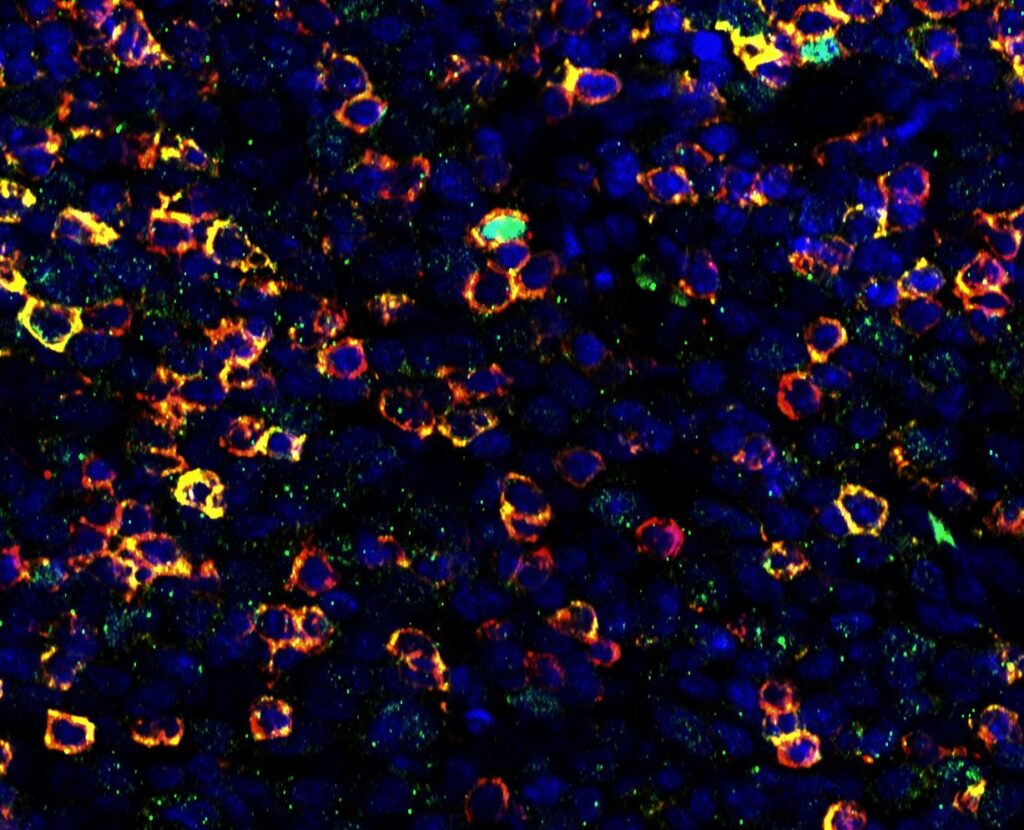
Our immune system has very important cells that control the production of antibodies — the “tools” the body uses to fight infections. Two of these cells are TFH cells, which help create protective antibodies after a vaccine or infection, and TFR cells, which prevent the body from producing misguided antibodies, which can cause allergies or autoimmune diseases.
Until now, scientists believed these two types of cells developed in the same way because they look very similar. But a recent study, led by researcher Luis Graca with first authorship by Filipa Ribeiro, both from the GIMM Foundation, discovered this is not the case: TFR cells develop differently from TFH cells, going through distinct stages before maturing.
This discovery, published in the journal Science Advances, is very important because it could help develop more targeted treatments. For example, we may be able to create vaccines that work better by acting on TFH cells, while at the same time improving treatments for allergies and autoimmune diseases by targeting TFR cells.
“In science, as in everyday life, not everything is exactly as it seems. It is important to have a critical attitude to prevent us to be misled by appearances,” explains Luís Graça, adding:
“In this case, one type of cell is important for producing antibodies to protect us after a vaccine, while the other type prevents antibody production associated with immune system diseases. This means we can now design strategies to make vaccines more effective by targeting TFH cells; or better treatments for autoimmunity and allergies by targeting TFR cells.”
This new understanding of the immune system opens the door to more effective and personalized therapies that will help protect our health better.
Filipa Ribeiro et al. (2025). PD-1 and ICOS are coexpressed in T follicular helper cells but define three stages of maturation of T follicular regulatory cells. Sci. Adv .11,eadt8901. DOI:10.1126/sciadv.adt8901