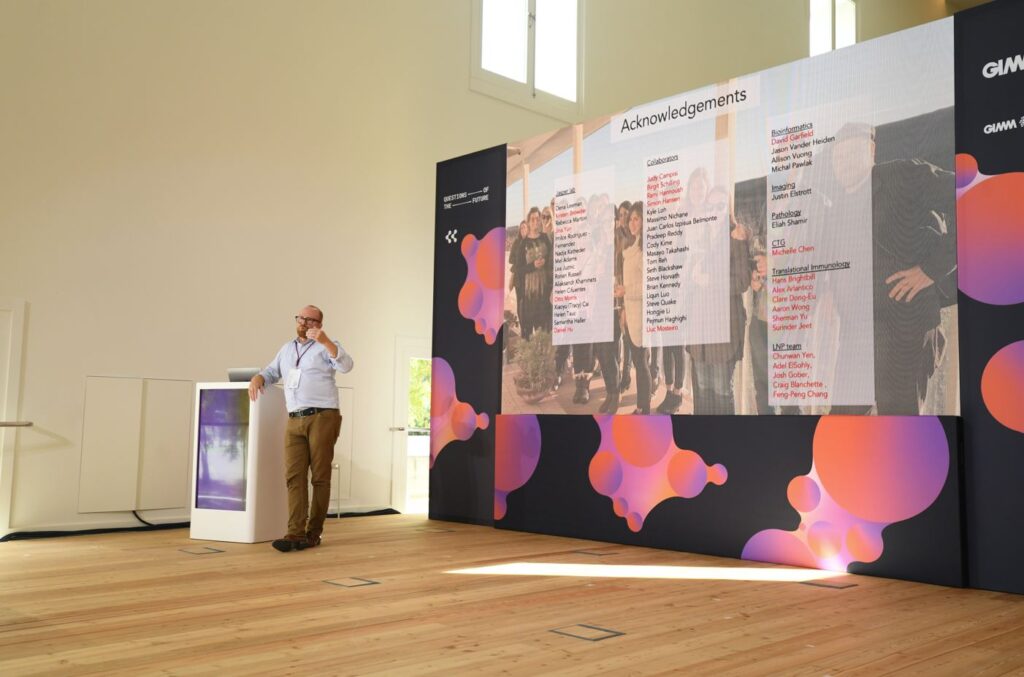
Molecular biology naturally took center stage in Claus Azzalin’s presentation, a researcher at GIMM and the Lisbon School of Medicine. To explain how he arrived at the telomere repair process, he journeyed through DNA, molecules, cells, and proteins, recalling chromosome fusions, loss of genetic material, senescence and its replication—decisive factors in the aging process.
Shortened with every cell division, protecting telomeres and controlling their instability paves the way to delaying age-related diseases. For the repair of broken telomeres, both the type of damage and the amount occurring simultaneously are key.
Maria A. Ermolaeva, from the Leibniz Institute on Aging in Jena, Germany, opened her talk with a strong statement: “A healthy lifestyle is a luxury, not the norm.” This set the tone for her discussion on the influence of diet, physical exercise, and sleep in accelerating or slowing down aging, and how to access benefits of a healthy lifestyle by people that don’t have that “luxury” .
Maria found that exposing the skin (at least 30% of the body’s largest organ, once a week) to NB-UVB (Narrowband Ultraviolet B)—a phototherapy already used to treat skin conditions such as psoriasis, eczema, and vitiligo—can replicate the positive effects of caloric restriction, through modulation of the mitochondria (the cell’s power plant through respiration).
Her research also touches on mimicking the benefits of quality sleep—different for each person, with some needing as little as five hours and others never less than eight— and is aimed at helping those who cannot sleep and suffer from sleep deprivation, regardless of the number of hours they rest. “Sleep quality is essential to our daily well-being, and the literature links sleep disorders to features of premature aging,” she explained.
Throughout the two days of the GIMM Festival, many speakers highlighted the importance of “tinkering” with senescent cells, their traits, and their functions. But only Heinrich Jasper, from Genentech—a biotechnology company within the Roche Group, dedicated to research and drug development for fatal diseases—addressed the need to enhance the regenerative capacity of stem cells, which are undifferentiated and capable of becoming any of the other cells in the body, including blood, nerve, muscle, cardiac, glandular, and skin cells.
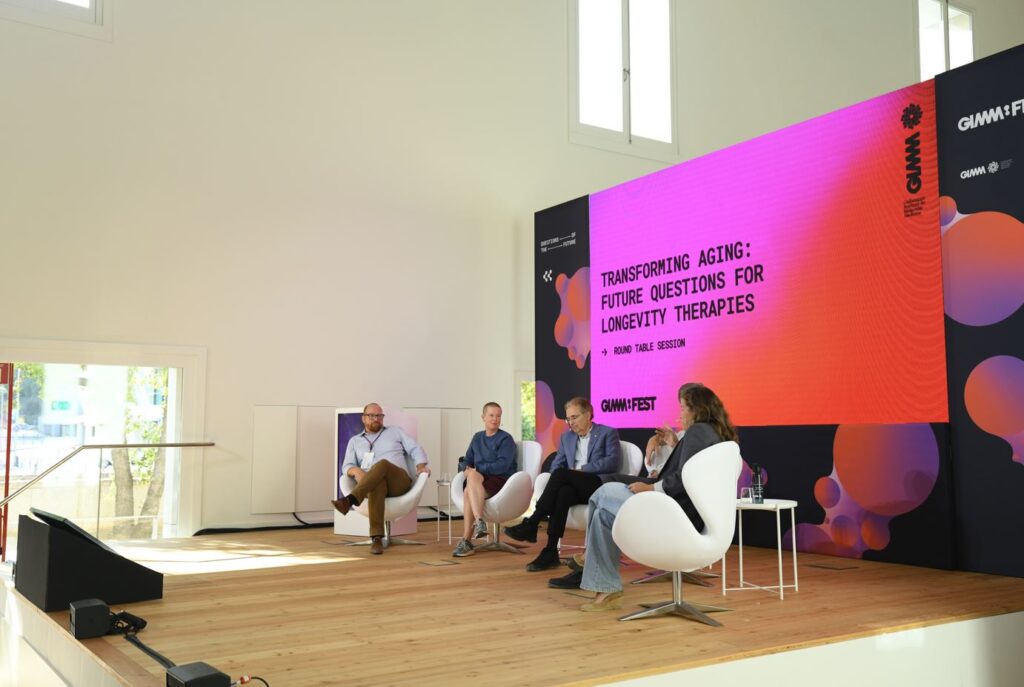
Later in the afternoon, Brian Kennedy, from the National University of Singapore and member of GIMM’s Scientific Advisory Board, returned to the stage to lead a conversation with Heinrich Jasper, Maria Ermolaeva, Maria Mittelbrunn, and Ron DePinho. Together, they reinforced some of the ideas presented in their individual talks.
Among the various strategies under study to delay immunosenescence, Maria Mittelbrunn would not place all her bets on rejuvenating the immune system, but rather on reprogramming the hematopoietic progenitor, while Ron DePinho prioritized senolytic drugs for cancer treatment.
The still nascent interest of the pharmaceutical industry in longevity was also a topic of discussion. Companies continue to focus on pathways for treating chronic age-related diseases, leaving behind the transition to prevention. “Efforts are being made to identify better biomarkers, to work with molecular clocks that prove markers are changing,” summarized Heinrich Jasper. But there is still a long road ahead before clinical trials in animals and then in humans can guarantee real health benefits for patients. “Pharmaceutical companies are growing beyond scientific oversight. We need to think about bringing them together,” argued Brian Kennedy. “Anything that doesn’t threaten life—like living healthier and longer—has to be treated like holy water.”