When the pilot and writer Antoine de Saint-Exupéry was a child, he imagined a boa constrictor swallowing an elephant. Years later, he turned that childhood drawing into one of the most famous images in the book The Little Prince: a snake with an elephant inside it. Adults see merely a hat.
More than 80 years after the publication of the worldwide literary phenomenon, questions like how does a vertebrate body become so long, so flexible – and, in the case of snakes, completely devoid of limbs still puzzles scientists (and can a snake accommodate an elephant).
“Snakes are all legless,” says Moisés Mallo, GIMM’s Group Leader. “But they weren’t always legless.”
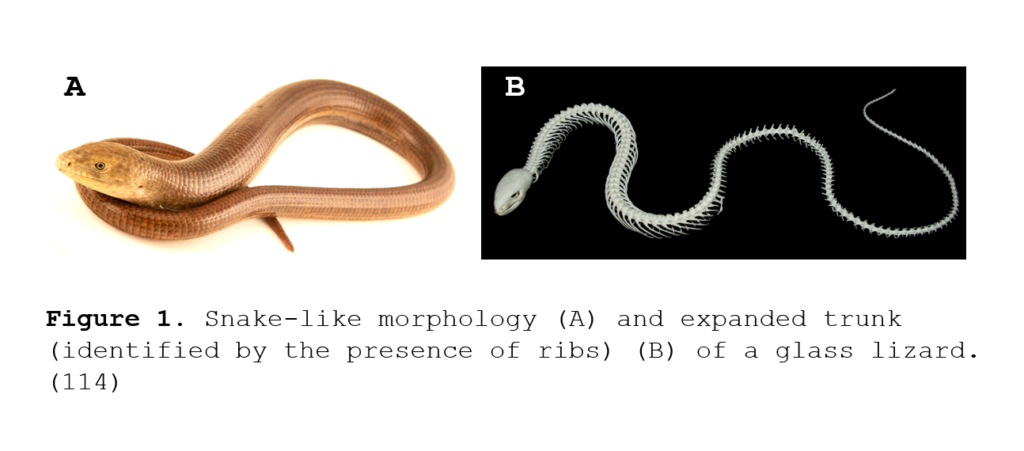
The ancestors of snakes were tetrapods: vertebrates whose basic body plan included four limbs. Over evolutionary time, snakes lost their limbs, while simultaneously developing extraordinarily elongated bodies. Some lizards have independently followed similar evolutionary paths, becoming snake-like and, in some cases, completely limbless.
Mallo wants to understand how this transformation happened by going back to the moment when its body is being built.
“If all snakes don’t have limbs, the classical approach to understand the origin of this was looking at what is common in all these genomes”. “However, this cannot be something that is specific of snakes. There are other tetrapods that don’t have limbs” he argues.
On a new project, that just got funded by the Human Frontier Science Program (HFSP), GIMM’s group, joined efforts with two teams at the University of Florida and the University of Turku, to try to answer the question “How snakes lost their limbs”, bringing together three research groups on two continents. GIMM, in Portugal, will coordinate the project and lead the experiments in mice, including genetic manipulation. At the University of Florida, in the United States, Martin Cohn’s team will lead the experiments in reptiles, working with snakes and lizards. In Finland, Laura Elo’s team at the University of Turku will lead the bioinformatics and computational analysis needed to make sense of the vast amounts of data generated by the two other teams. The project is starting this September, with funding of $1.2 million, over a three-year period.
During this time, the team will compare snakes with lizards that still have legs, as well as with limbless lizards and mice. The key is to watch development unfold. As an embryo grows, cells at its posterior end progressively build the trunk and then the tail. The transition between these two developmental programmes is tightly regulated by networks of genes that determine what kind of body structures can form and where. Mallo’s previous work has shown that this trunk-to-tail switch is a fundamental process in vertebrate development.
“The origin of the project is exactly that: to compare during development, when this area is being formed, what is different and what is the same among the ones with legs and the ones without legs,” says Mallo.
One possibility is that limb loss is not simply a matter of switching off the genes that make legs. Instead, it may be connected to when and where the embryo stops making trunk and starts making tail. “In this transition from making the trunk to making the tail is when there are the inducing signals that make the limb and the genitalia,” Mallo explains.
The hypothesis is that changes in the timing of this transition could disrupt the signals or separate them from the tissues that respond to these signals to initiate the limbs. “If this goes like growing, growing, growing, and then the two things are not coordinated anymore, then you don’t induce the limbs.”
But it needs to be tested. To find out, the researchers will look for which genes are active in developing embryos and which regions of the genome are accessible to the molecular machinery that controls gene activity. They will compare these patterns across species, searching for the regulatory changes that accompany the evolution of a long, limbless body.
The approach may reveal something larger than the origin of snakes. Mallo’s research has already shown that changes in the timing of developmental programmes can have profound effects on body shape. In snakes, for example, prolonged activity of developmental regulators such as Oct4 has been linked to their exceptionally long trunks, a finding that marked the initial collaboration between Mallo’s and Cohn’ groups.
So what does all this have to do with Saint-Exupéry’s elephant?
A snake’s ability to swallow a huge meal is not simply a consequence of losing its legs. It also depends on specialised adaptations of its skull, jaws, muscles and highly flexible body. But before a snake could evolve into such an extraordinary way of life, evolution had to reshape its basic body plan. First came the long body. Then came the remarkable flexibility that allows it to accommodate prey far wider than its own head. Understanding how that body plan is built and how evolution changed the developmental instructions that produce it may therefore bring scientists a little closer to understanding the animal in Saint-Exupéry’s drawing.