About 15% of all breast cancers are triple-negative (TNBC). This classification applies to breast cancers that lack expression of the estrogen and progesterone hormone receptors and the HER2 protein. Currently, survival rates and clinical outcomes for people with TNBC are poorer than for those with other types of breast cancer, as most treatment options rely on targeting HER2 or the estrogen and progesterone receptors.
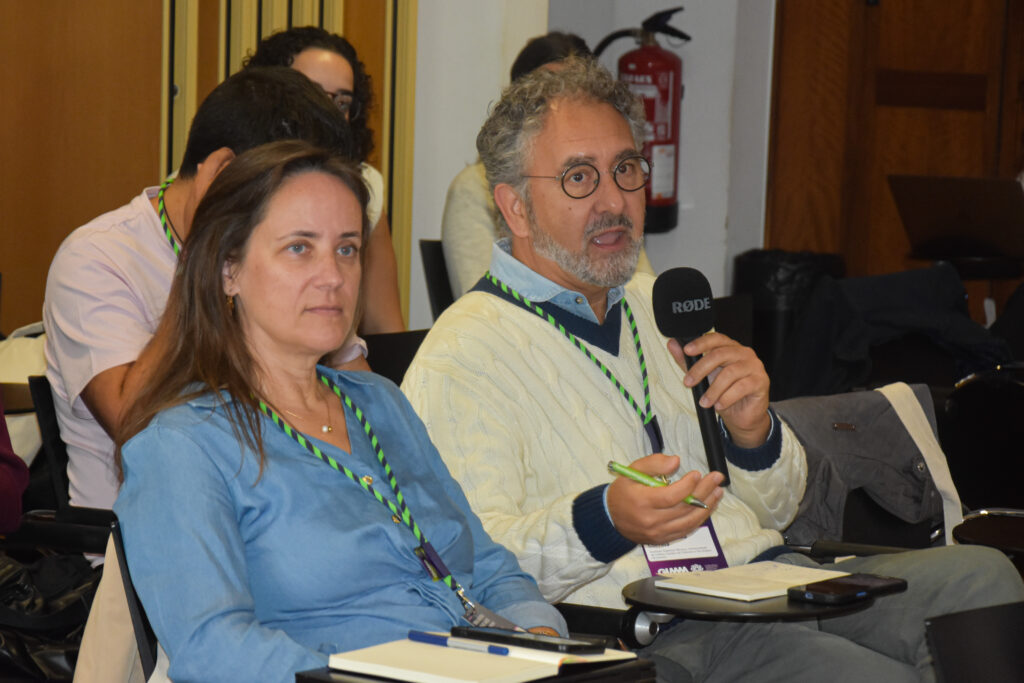
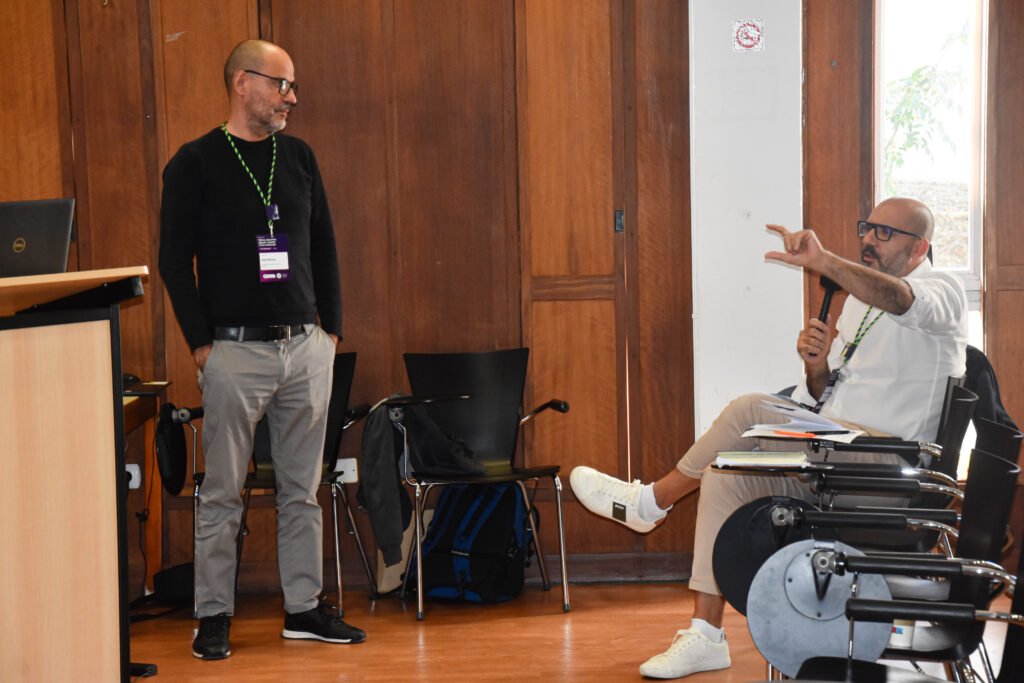
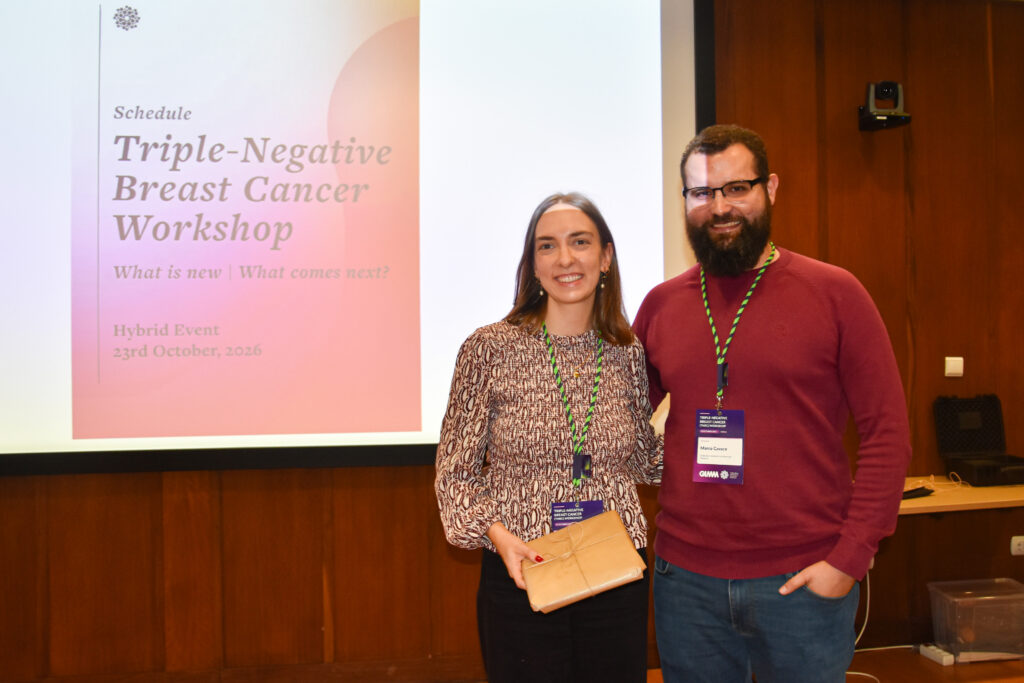
On October 23, GIMM brought together basic researchers, clinicians, and pharmaceutical company representatives to discuss the latest developments in TNBC at a workshop organized by Marco Calvinho Cavaco, from the Miguel Castanho Lab.
The event, entitled “Triple-Negative Breast Cancer Workshop | What Is New | What Comes Next,” was held in a hybrid format, both in person at the GIMM Campus in Oeiras and online, as part of the Pink October program. Around 75 people attended in person in Oeiras, while 90 participated online, representing more than 50 institutions and hospitals and reaching participants from over 20 countries.
One of the key messages of the day was that the future of breast cancer care lies in precision medicine and includes antibody-drug conjugates (ADCs), next-generation radiotherapy, and immunotherapies. “TNBC is the most immunogenic type of breast cancer,” said Guadalupe Cabral, from NOVA Medical School. This makes TNBC an excellent target for immunotherapy. In her talk, the researcher and professor explored the use of the white blood cells neutrophils and antibodies as novel therapeutic agents. Sofia Mensurado, from the Ribot and Silva-Santos Lab, and Teresa Abreu, from iMed.ULisboa, also discussed the use of γδ T cells and nanobody-based CAR-T cells against TNBC, respectively.
Building on TNBC’s high immunogenicity, ADCs use antibodies to deliver anticancer drugs directly to cancer cells while limiting damage to surrounding tissue. Similarly, radioligand therapy (RLT) and theranostics are emerging approaches that use patient-specific biomarkers to direct radioactive isotopes toward tumor cells while sparing neighboring healthy cells. These approaches are currently being explored for both treatment and highly sensitive diagnosis. None of these three approaches are limited to TNBC, and all hold promise for improving the quality of life of many cancer patients, explained industry representatives Ana Luis, from Daiichi/AstraZeneca, and Diogo Medina, from Novartis.
The use of experimental models such as zebrafish avatars that mimic each patient’s tumor, or organs-on-a-chip and chicken embryo in vivo models was also discussed.
In summary, although TNBC remains difficult to treat, the developments presented at the workshop offered an optimistic outlook for the future of patients and their families. Most of the approaches discussed could also be applied to other types of cancer, laying the foundations for a new era in cancer treatment.