The spirit of discovery ran through all three days of GIMM Fest. On Saturday, when we opened our doors to the public, we added a new dimension: sharing science with the nearly 1,000 visitors who came to the Pavilhão de Portugal on 19 September. At the opening session of the public day, our CEO, Maria Mota, set the challenge: “I hope you leave here with questions, and that you ask questions every day.”
Throughout the day, people of all ages explored the different spaces in the pavilion in an atmosphere of joy and curiosity, engaging with some of the questions that had occupied more than 300 researchers over the previous two days. Why are microbes important for our health? How can they help prevent, diagnose and treat disease? And can we learn to programme them to do new things?
“The best discoveries are yet to come,” said researcher Ana Santos Almeida. The final day of GIMM Fest showed that asking questions can be a good place to start.
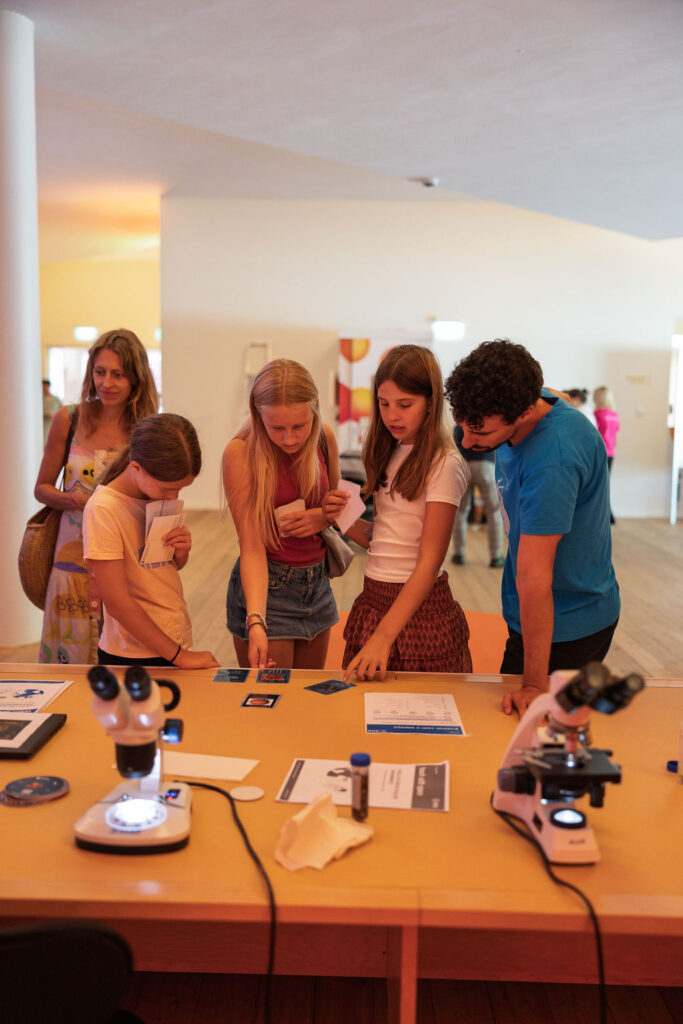
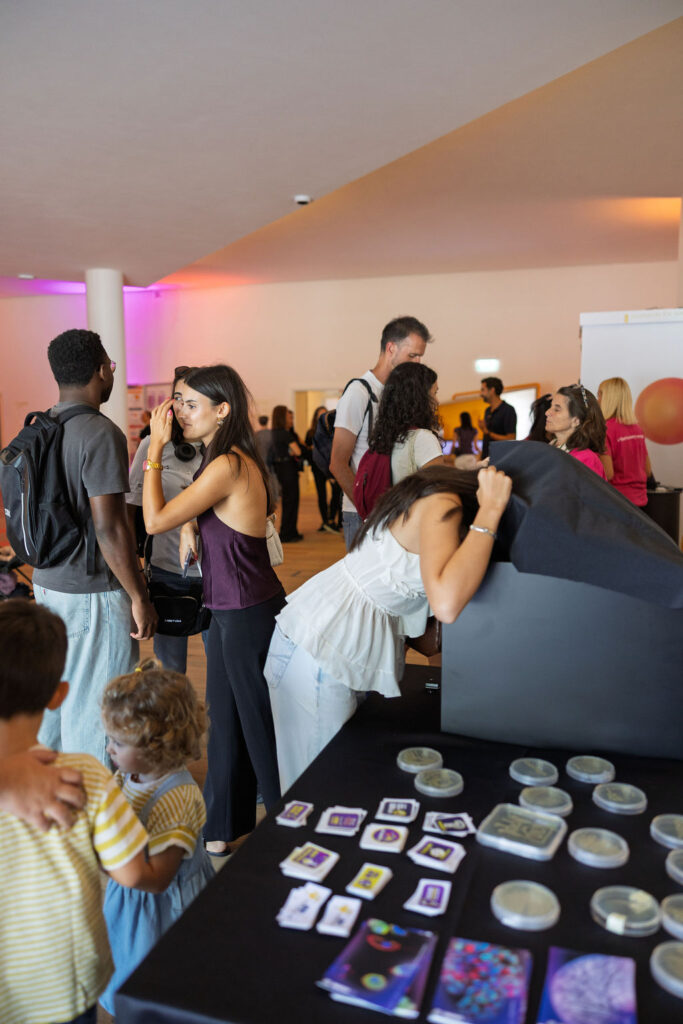
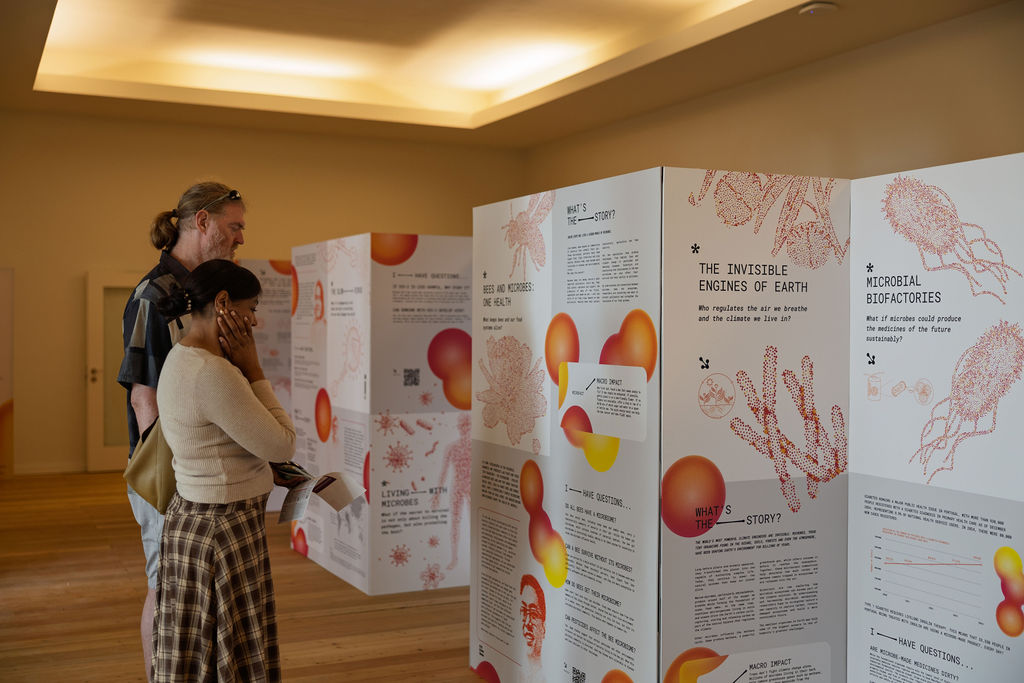
Throughout the day, visitors could create a microbe and turn it into a pin, play a memory game featuring different microorganisms, or try their luck at the claw machine for a chance to win microscopes or GIMM merchandise. There were also opportunities to see things that usually remain invisible to us. At Microcosmos, visitors could observe the phyto- and zooplankton found in a drop of water under a microscope, while an activity dedicated to bioluminescent bacteria showed how Vibrio harveyi can produce blue light and communicate with other bacteria. The more curious visitors could also discover tardigrades, the so-called “water bears”, and explore their extraordinary ability to survive in extreme environments.
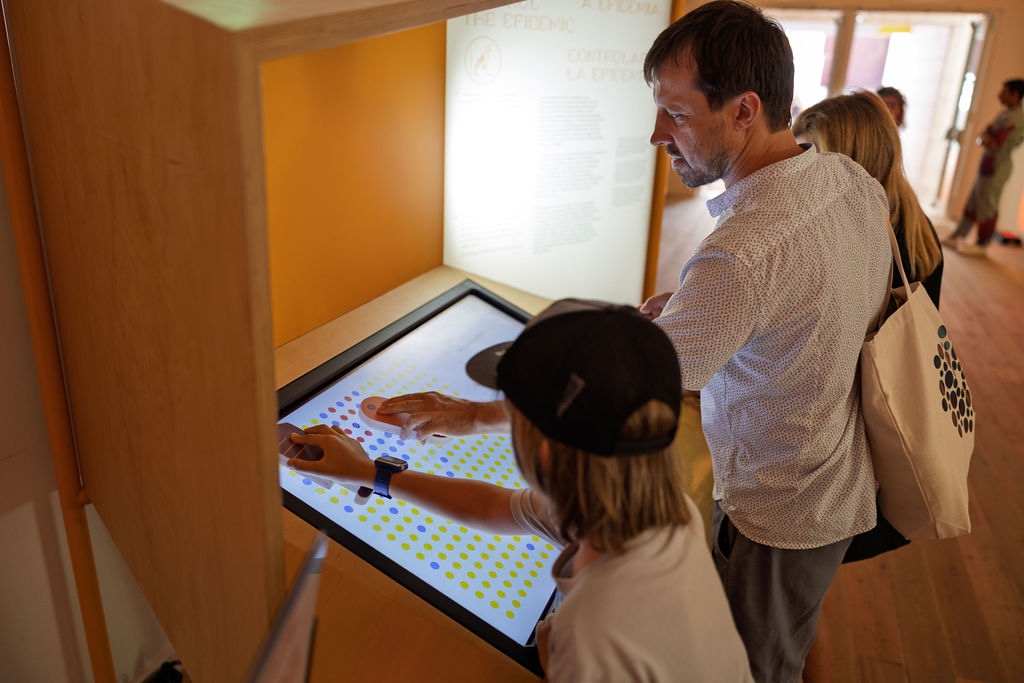
Understanding microbes also means understanding how they affect our lives. In Controlling the Epidemic, participants tried to stop a virus from spreading and discovered how different strategies, including vaccination, can help control an epidemic. In Epidemic Detectives, they took on the role of epidemiologists, investigating outbreaks, identifying routes of transmission and learning about the importance of simple preventive measures.
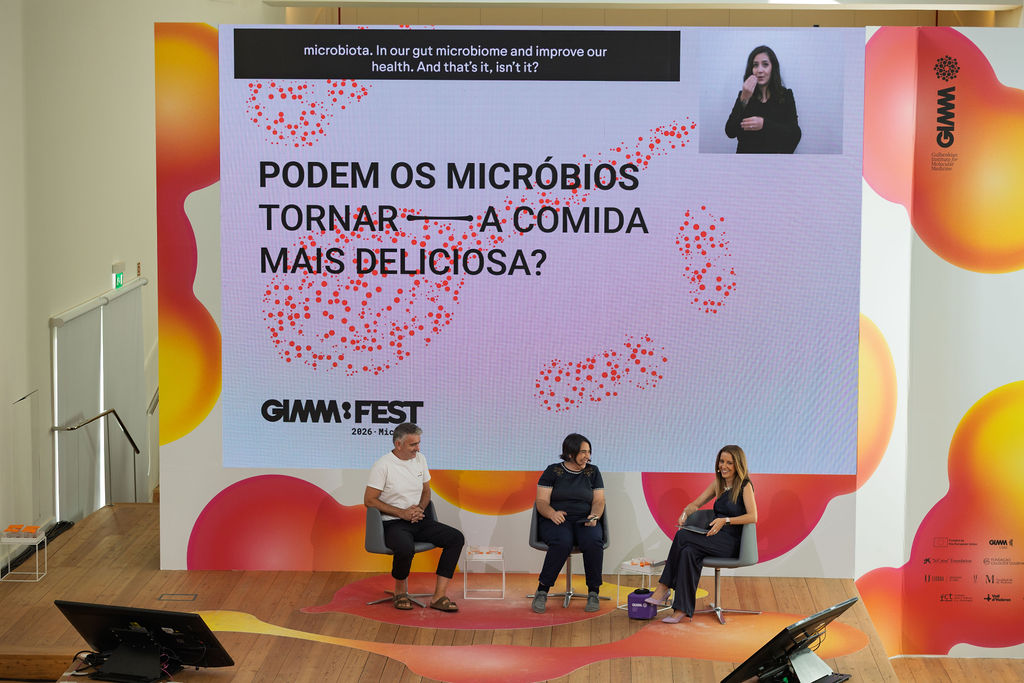
There was also room to experience science in other ways. In Science on the Walls, researchers and street artists joined forces in a game of “Chinese whispers”, transforming scientific research into urban art. And at the Fermentation Market, microbes made their way onto our plates. Through tastings, demonstrations and conversations with producers and scientists, visitors discovered how fermentation transforms ingredients and creates new flavours. Kefir, beer, bread and kombucha were among the ways to explore how microorganisms are part of our everyday diet.
Not all microbes are enemies
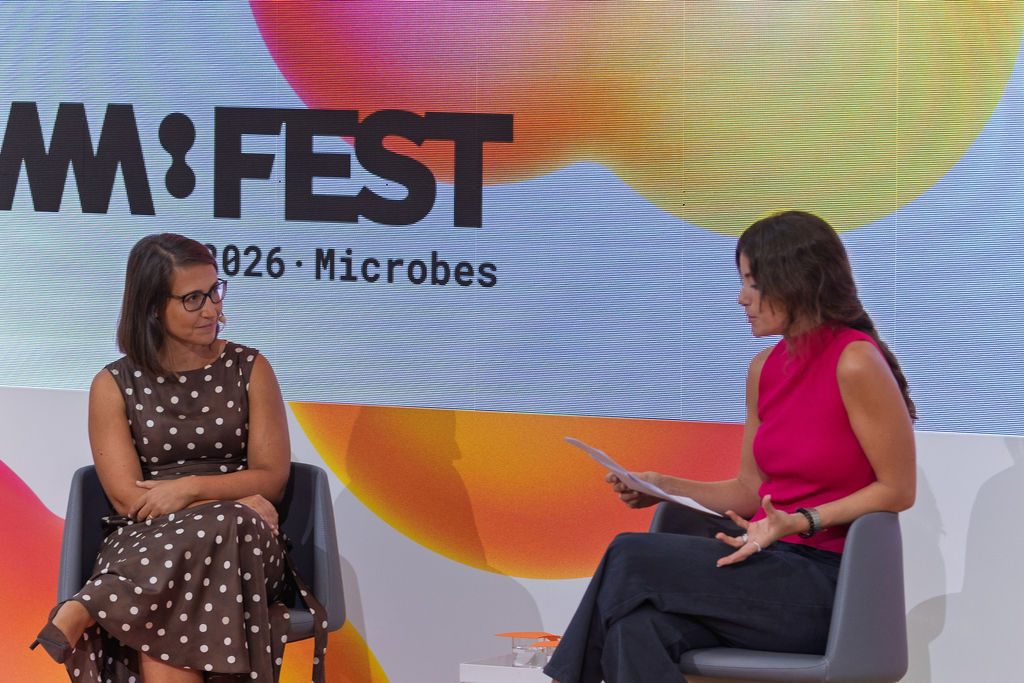
Children do not need to grow up in a bubble, protected from the world and, above all, from microbes. In the auditorium, during a live recording of Consulta Aberta, a podcast hosted by doctor Margarida Graça Santos, paediatrician and GIMM researcher Patrícia Costa Reis explained that a completely sterile environment does not support the development of the immune system. Normal contact with different microorganisms is part of that learning process, although this certainly does not mean deliberately seeking out infections. Vaccination, hygiene and common sense remain essential.
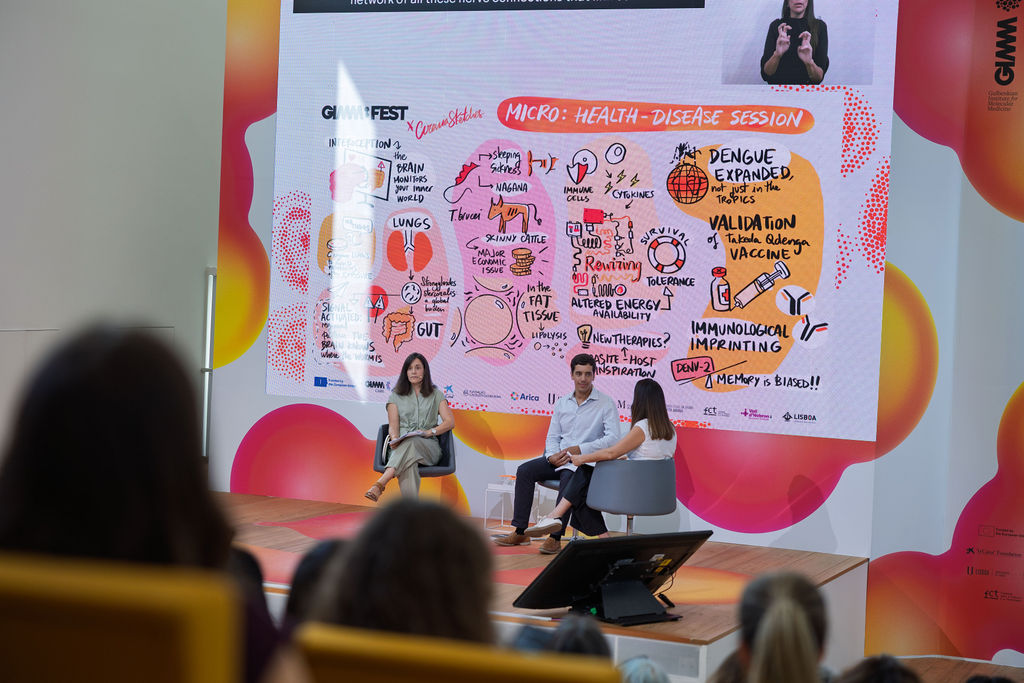
Ana Santos Almeida and Cristóvão Sousa, Head of R&D at GIMM Care, revisited some of the discoveries presented during the festival’s scientific days, summarising them and making them accessible to the public. One of the central ideas was that we are made up of more than our own cells and genes. We are also shaped by the ongoing relationship we maintain with the billions of microorganisms living in our bodies.
And if we can better understand this relationship, we can also begin to intervene in it. Cristóvão Sousa explained how synthetic biology is making it possible to modify microorganisms with increasing precision. The production of insulin using modified microorganisms is already a reality, but researchers are now exploring more sophisticated possibilities: programming bacteria to detect changes in the body or produce specific substances exactly where they are needed.
Science also has to compete for our attention
At a festival devoted to the questions of the future, there was also room for an issue that is very much part of our everyday lives: how can we combat misinformation? And what role can humour play in this effort?
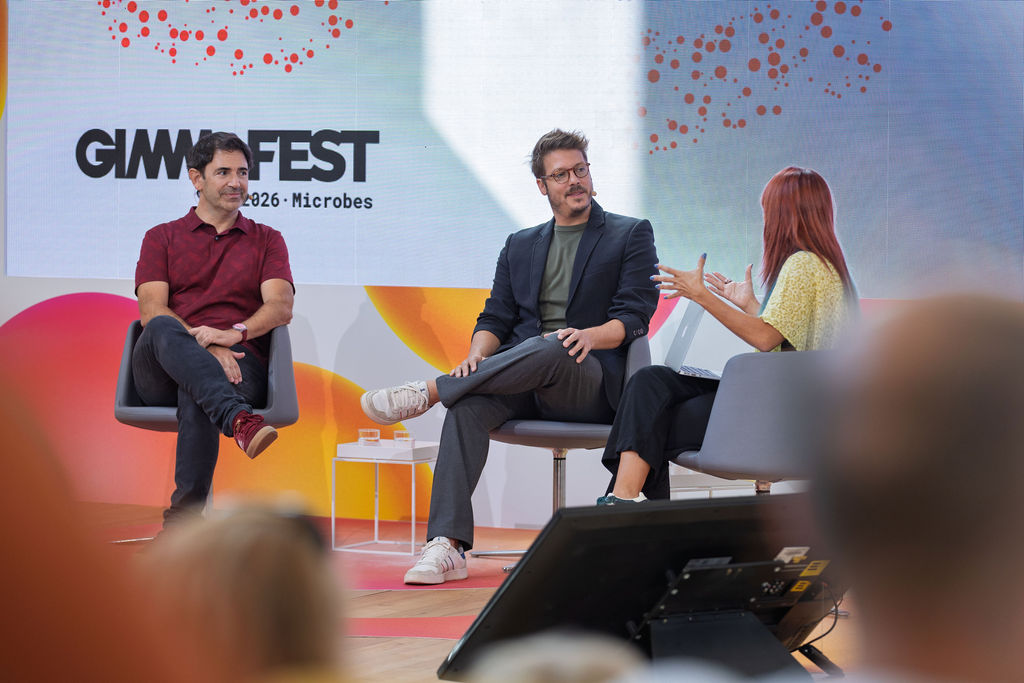
The session How Can Humour Help Fight Misinformation? brought together GIMM researcher Bruno Silva-Santos and Brazilian comedian Fábio Porchat, in a conversation moderated by radio presenter Ana Markl. Uncertainty is an inherent part of the scientific method, Bruno Silva-Santos pointed out. The problem is that a false explanation can offer something science cannot always provide straight away: a simple, seemingly definitive answer. That is why, he argued, it is not enough for scientists to say “I don’t know”. They need to explain what remains unknown and what they are doing to find the answer.
There is another challenge: stories can carry more weight than numbers. Statistics based on millions of cases may have less impact than the experience of someone close to us. As Bruno Silva-Santos put it: “It makes no difference if two million people didn’t have a side effect, if the lady at the local grocery store did.”
Can humour help fight misinformation? Fábio Porchat believes it can. But there is one condition: first and foremost, the joke has to work. “The joke works if you laugh,” said the comedian. That does not, however, remove the responsibility of those communicating to think about what they say — and who is listening.
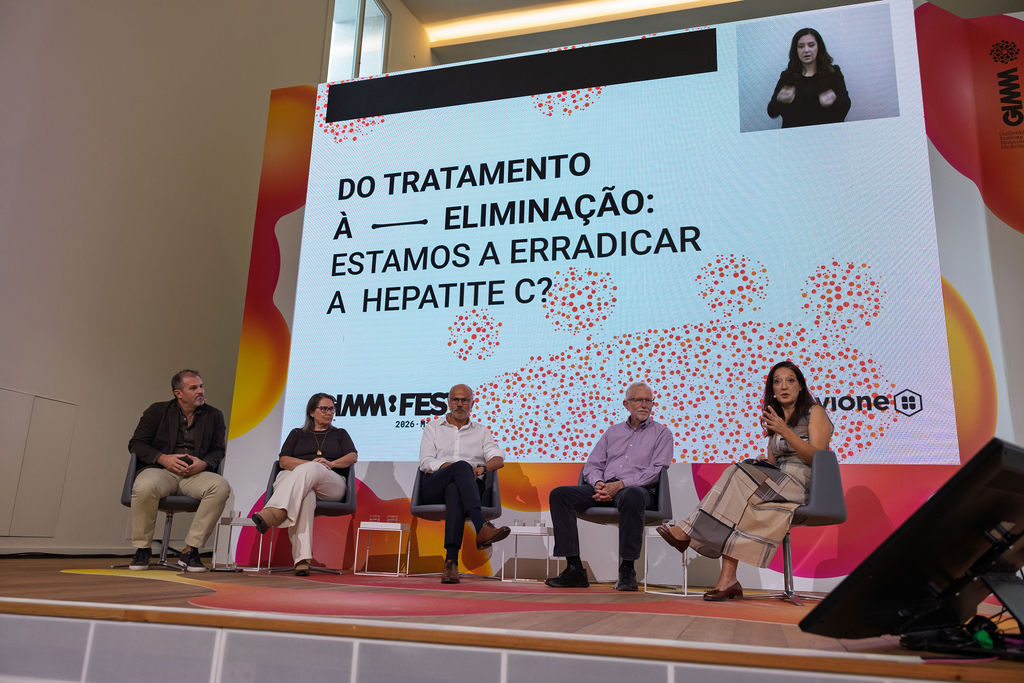
Portugal’s role in the cure for hepatitis C
The day also ended with a story that shows how far science can go when a discovery becomes a practical solution. Hepatitis C went from being a disease whose cause was unknown, with treatments that could be extremely harsh, to an infection that can now be cured in just a few weeks.
In Portugal, more than 30,000 people have been treated over the past decade, with around 97% cured. But having a cure does not mean the problem has been solved.
“We have the tools that should allow us to eradicate it,” said Charles Rice, the 2020 Nobel Prize laureate in Physiology or Medicine and special guest at GIMM Fest. The challenge now lies in public health and in ensuring that these tools reach different communities.
Ricardo Fernandes pointed out that pockets of infection remain in Portugal and argued that treatment must reach everyone if hepatitis C is to be eliminated as a public health problem.
Over three days, GIMM Fest brought together researchers, students, healthcare professionals, science communicators and visitors of all ages around a simple idea: science often begins with a question. The festival will return from 23 to 25 September 2027. The theme has already been announced: synthetic biology, which brings us to a new question: what can we build when we learn to programme life?